From Stainless Steel to Titanium, This Might Be an Underrated Upgrade
Have you noticed that in the past two years, more and more people around you are using thermos cups, but the "material" of the cups has quietly changed?
In the past, we discussed: "Should I buy 304 or 316 stainless steel?"
Now, people are starting to ask: "Should I try titanium?"
If stainless steel thermos cups solve the issue of "being sufficient," then titanium thermos cups seem to be answering a new question—can it be lighter? Cleaner? More reassuring?
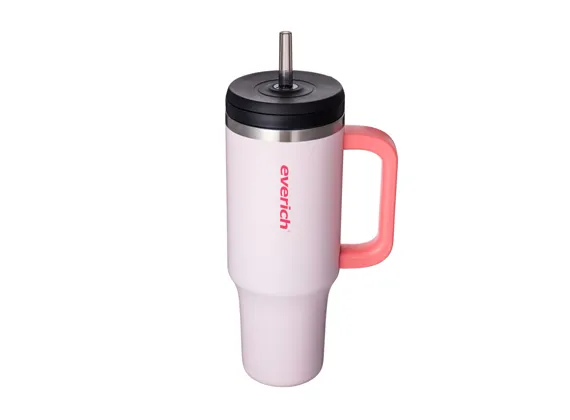
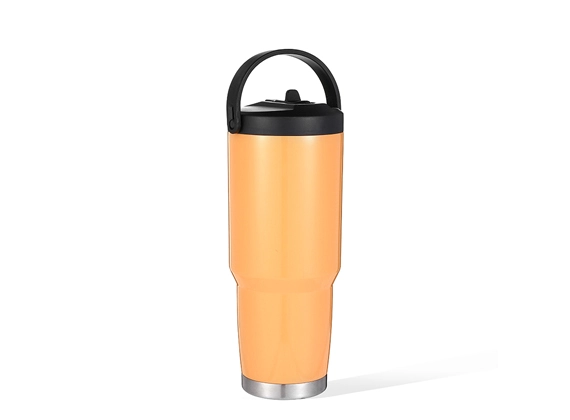
For example, the ultra-light double-layer titanium alloy thermos cup 32005 by Everich is a typical representative of this change.
1. The Cup You Use Every Day is More Important Than You Think
We use cups every day:
In the morning for coffee, in the afternoon for tea, at night maybe for warm water.
But very few people seriously think about one thing:
Can the material of the cup affect the original taste of these things? Or even affect the body?
Stainless steel is actually very good. It is durable, stable, and safe enough, which is why it has been the mainstream choice for so many years.
But "very good" does not mean "better."
2. Why is Titanium Gaining More Attention?
Titanium as a material is actually not new at all.
It has long been used in more "serious" places, such as:
In other words, it's a very "friendly" metal to the human body.
When applied to daily products, the changes it brings are actually quite direct:
Cleaner Taste
Many people who use stainless steel cups for a long time find that:
When holding tea or coffee, sometimes there's a slight "metallic feel."
Titanium does not.
It hardly reacts with any beverages.
What you taste is the original taste of the water.
Lighter Burden
This is the most intuitive feeling for many people when they first pick up a titanium cup—"Why is it so light?"
Compared to stainless steel, titanium is significantly lighter.
The feeling in your commuting bag, backpack, or even in your hand will be much lighter. Everich's ultra-light double-layer titanium alloy thermos cup itself focuses on being "ultra-light," and if you are someone who often goes out, commutes, or travels, this difference is actually quite noticeable.
More Reassuring Usage
Titanium does not rust, is not afraid of acid, tea, or coffee.
You don't have to worry about:
Its state will remain very stable.
This feeling of "not having to worry even after long use" is one of the most addictive aspects for many people after switching to titanium cups.
3. But Titanium Cups Used to Have a Problem: Not Very "Insulated"
To be honest, many people did not choose titanium cups early on because of a practical issue: they were not very good at insulation. This is also why stainless steel has always been dominant.
But in recent years, a very noticeable change has occurred—the technology has started to catch up. Everich's titanium thermos cup uses a double-layer vacuum structure.
Simply put: On the basis of being "light," the insulation capability has been supplemented.
For daily use (such as commuting, office work, going out for half a day), it is already completely sufficient.
It is not on the "extreme 24-hour insulation" route,
but it is more like finding a balance:
Not so heavy
can also insulate
comfortable to use
This point actually fits the lifestyle of many people today.
4. You'll Find Many Brands Starting to Talk About "Titanium"
If you look at some brands now, you'll notice an interesting phenomenon:
Everyone is talking about titanium, but in different ways.
Some emphasize: "Safer, as reassuring as medical-grade," some emphasize: "Lighter, suitable for outdoor and travel," and some go the high-end route: "This is a more textured lifestyle."
Everich's approach is actually more practical: It does not emphasize just one point, but balances lightness, durability, and insulation together.
Plus, with their advantage in ODM customization,
this type of product is actually also very suitable for brand gifts or high-end custom models.
5. Is it Really Worth Switching to Titanium?
This question has no standard answer.
But you can think from another angle: If you just need a cup that can hold hot water, doesn’t leak, and is usable, then stainless steel is completely enough.
But if you start to care about:
Whether the cup is lighter
Whether the water tastes "cleaner"
Whether it is more reassuring after long use
Then titanium will be a very natural upgrade.
6. About Everich's Titanium Cup, You Can Simply Remember These Points
No need to complicate it, just remember four keywords:
Light: There's really a difference in the hand
Clean: Does not affect the taste of water and beverages
Stable: Does not rust, not picky about beverages
Balance: Finds just the right point between lightness and insulation
Conclusion
Some changes are noticed very slowly.
For example, switching from stainless steel to titanium,
you won't feel "completely different" overnight,
but you will notice in many small details:
The bag seems a bit lighter
The water seems a bit tastier
It's more worry-free to use
These kinds of changes are not ostentatious, but very real.
And products like Everich that make titanium cups lighter and more practical are precisely in line with this trend.
If stainless steel is "what everyone is using,"
then titanium is probably the kind of thing—once used, it's hard to go back.